
 Five Years
Teresa Tennyson
North Street Book Prize 2025 (view all the winners)
Grand Prize, Genre Fiction
 Critique by Jendi Reiter
Teresa Tennyson's speculative novel Five Years imagines humanity facing imminent extinction due to climate change and collapse of the ecosystem, symbolized by the extinction of bees. For the residents of one New England town, the existential question is whether they can face the end with dignity and mutual aid, or be swayed by a strongman who advocates survival of the fittest.
Two years before our story begins—that is, halfway through our remaining time on earth—the fictional New Hampshire town of Middlewich voted to seal itself off from the rest of the dying world. Following democratic procedures, they established a system to distribute their remaining rations and take care of each other's needs. Knowing that the end is inevitable, they reasoned, the most important thing is to treat one another in a civilized way, not losing their empathy in the doomed scramble for survival.
Middle-aged widow Elise Farthington, a classic Yankee liberal and outdoorswoman, presides with some trepidation over the town government that manages this system. But big-city transplant Grantham Greene, a wealthy and charismatic man with an overweening sense of entitlement, threatens her hold on the residents' loyalties. Through a combination of force and persuasion, he starts convincing people that they'll get a bigger share of resources if they seize power with him. Meanwhile, Elise and her core team have stumbled upon a colony of bees that are thriving, giving them hope for the future. Can they keep this potentially game-changing discovery secret from Greene's followers until he's defeated?
First-round judge Annie Mydla said, "This novel acknowledges the struggle America is currently facing—we must fight and work incredibly hard to save our democracy, but if we win, we won't get resolution, only democracy. That means the chance to continue to fight. For some people, that prize is not big enough. They want a sense of finality, which they think a dictator can bring them. Five Years taps into the fear and frustration Americans who support democracy are feeling now and connects it to the climate fear that's helping to fuel polarization and panic. In this way, the book fulfills both the exploratory and demonstrative roles of speculative fiction."
I felt the scale of this story was exactly right, which elevated it over other speculative fiction in the contest. The worldwide catastrophe affects every aspect of the characters' lives, but the focus remains tightly on this small town that the reader has come to care about. We don't need to see the chaos and suffering outside Middlewich's walls because we feel it pushing in on their fragile boundaries at every turn. The characters are well aware that their choices are a microcosm of the human condition, a final verdict on whether humanity can and should survive. The story's central dilemma is also refreshingly different from most climate apocalypse fiction—not whether but how we choose to die.
The back cover blurb concisely summarized the premise, the stakes, and the main conflict. It performed its core function of making me want to find out more. The text was a clear but somewhat small black font over a rust-colored gradient background. It was smart to put the lighter hue at the top so that the text would stand out.
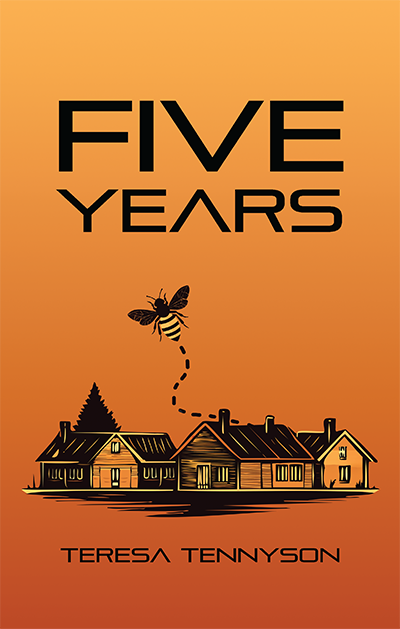
The front cover had the same gradient with the title in futuristic sans-serif capitals above a drawing of classic New England houses and a bee spiraling upwards. The minimalist sketch and color scheme read "literary" to me, appropriate for the serious issues this book tackles, but it wasn't giving "post-apocalyptic" or suggesting how much exciting action lay within. The interior formatting was simple but professional, and the rounded font was easy to read.
Ending on a tentatively hopeful note, this absorbing tale is a testament to the value of democratic norms, especially at times when we are most tempted to abandon them.
Read an excerpt from Five Years (PDF)
Buy this book on Amazon.