

 Uplift
Jessica Mann
North Street Book Prize 2025 (view all the winners)
First Prize, Genre Fiction
Critiqu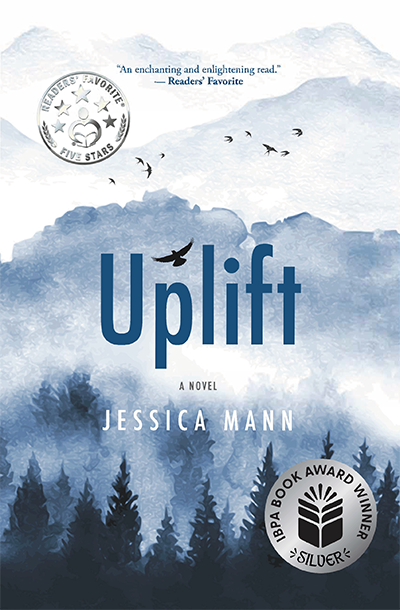 e by Jendi Reiter
Jessica Mann's ecological fantasy novel Uplift tells a story of interspecies cooperation through the coming-of-age journey of a Clark's Nutcracker, a bird of the high mountains of the American West and a member of the crow family. Breaking with her family's insular ways, Columbina learns about loss and legacy from creatures whose lifespans range from a season to centuries, and returns with fresh ideas to save their habitat.
Animal allegory is a classic way to dramatize the big questions of how society should be structured, as we saw in last year's Middle Grade winner Tamiu: A Cat's Tale. Each of us is confronted with the developmental drive to individuate from our origins without being wholly exiled from our community. An author can endow an animal character with the consciousness and motivations of a human protagonist for a story that works out this conflict in a more universal and mythic register. For instance, Alex the lion in the Madagascar movies, undertaking his quest from the Central Park Zoo to Africa and back again, stands in not only for the child viewer pondering his eventual separation from his parents, but also for Americans from many immigrant backgrounds who seek authenticity and completeness by visiting their ancestors' homelands.
Uplift stands out in this genre because it adds the dimension of accurate scientific background about the characters and their habitat. The book has a specificity that supports its conservationist message. We learn that the Clark's Nutcracker has a symbiotic relationship with the Whitebark Pine, which depends on the birds to propagate its seeds. These mountain trees can live up to a thousand years! The Whitebark in this book is a named and self-aware character, a goddess-like elder. Hummingbirds, dragonflies, kingfishers, beavers, and bears also make an appearance, each behaving in ways that match both the observed habits of their species and the metaphorical qualities we associate with them.
From her earliest days, Columbina is curious and observant, questioning the simplistic and repetitive Nutcracker lifeways: mate, migrate, eat, and stick with your own kind. When drought and human construction projects threaten her entire ecosystem, her maverick temperament has survival value, sending her on a mission to learn new skills from other species and win their cooperation.
The book is beautifully written, with clear language and vivid settings. It would be accessible to high school or advanced middle-grade readers, though some who prefer a constant fast pace might be deterred. The interior has elegant formatting enhanced with black-and-white animal portraits by Steve Habersang. Uplift is a gentle book that will reward patient attention.
Read an excerpt from Uplift (PDF)
Buy this book on Amazon.