

 Homage
Kathleen Spivack
North Street Book Prize 2025 (view all the winners)
First Prize, Poetry
 Critique by Jendi Reiter
Kathleen Spivack's poetry chapbook Homage is comprised of tributes to guiding figures in her life as an artist, from cellist Pablo Casals and painter Gustav Klimt to poets Robert Frost and Elizabeth Bishop, as well as personal mentors and ancestors. This tightly conceived collection shows a mature poet's mastery of craft and insight.
A central long poem in the collection, "The Great Railroad Train of Art", imagines her life as a survey course on the great masters from Da Vinci through Picasso, the turning points of Western history running parallel to her passage from college to old age. "Is this what was meant by 'Perspective'," she quips, picturing herself in "College Art History class, yawning in darkness…a shocked glare at the end/of the show?" The train of time speeds past faster than the blasé youth could have thought possible. "No one could slow it down though many tried,/wild haired and waving helplessly." The wild hair made me think of Albert Einstein, with his revelations about the perspectival nature of time.
Spivack had the privilege of studying with some of the great mid-century poets at Boston University in the 1950s, as she describes in her memoir With Robert Lowell and His Circle (Labyrinth Books). Homage opens with a recollection of playing ping-pong with an elderly Elizabeth Bishop; the poem's form and intergenerational narrative allude to Bishop's "Sestina".
This multilayered quality is what is most often lacking in the North Street poetry books that don't reach advanced rounds. Spivack's poems work on the surface as human-interest anecdotes with rich imagery, but they don't stop there. There's a deeper level of enjoyment available to readers who recognize how the form and content call back to the old masterpiece that inspired the poem.
A couple of poems in Homage would have been stronger, in my opinion, if they had ended before the over-explaining final lines. For instance, I would have cut the last stanza of "Madame Joelle Blot, My French Teacher" and the last line of "Tivoli: The Curator Goes Home" so that they concluded on a strong image rather than an abstraction like "transfixed" or "beginning again".
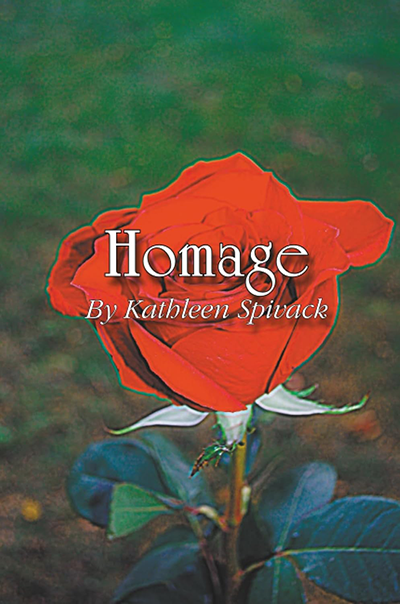
The front cover—a photograph of a red rose with the title and author superimposed in white type—had bold colors and an uncluttered design, but did not tell me enough about the book's genre and aesthetic. It felt generic, whereas these poems are anything but. A slightly lighter shade of green on the back cover would have made the book description text more legible. The photo of the author in her tulip garden nicely picked up the theme and color scheme of the front cover. I was reminded of Impressionist paintings. This is a collection that celebrates its lineage and adds a personal touch to the classics that have inspired so many of us.
Read an excerpt from Homage (PDF)
Buy this book on Amazon.