

 The Truthful Story
Helen Stine
North Street Book Prize 2025 (view all the winners)
Honorable Mention, Middle Grade
Critiqu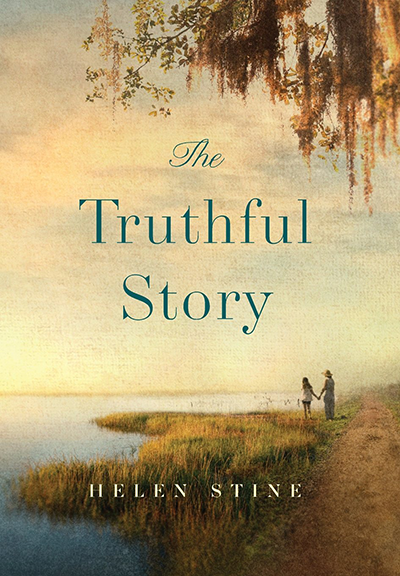 e by Jendi Reiter
Helen Stine's historical novel The Truthful Story has crossover appeal for sophisticated and sensitive Middle Grade readers and for adult fans of upmarket fiction. Set in a small island community in lowcountry South Carolina in 1965-67, the story opens with 10-year-old narrator Genny Donovan learning that her beloved grandmother has been found drowned in the river.
Nannie was an outdoorswoman and environmental activist. Could her death be related to her opposition to a domineering businessman who wants to buy the island and reopen its oyster-processing factory? Some in the town hoped that the venture would bring needed jobs, while others, including Nannie, argued against the water pollution and dangerous working conditions at the old factory.
Genny is not the only one to find the circumstances of the death suspicious. But she is the only one who can see Nannie's ghost. Meanwhile, Genny's family and their Black servant family are called upon to help one another through crises including domestic violence and the death of a child. "Remember that things aren't always what they seem," Nannie's spirit cautions, not explaining so much as guiding Genny to see through prejudices and understand people with her heart, and thereby help solve the mystery.
The Truthful Story has beautiful writing with a strong sense of place. The tween narrator's voice and concerns were completely believable for her age and social location. Though it deals with heavy issues for young readers, they are depicted in a developmentally appropriate way, and the difficult emotions are cradled in a context of heartwarming mutual care by family and community members. I especially liked how Genny and her extended family were respectful and inclusive of mentally challenged and disabled characters. One of her friends is a nonverbal, wheelchair-bound young woman who is brilliant and loves books.
I felt that race relations were rather idealized in this novel. I don't doubt that there were close-knit small communities where white and Black families behaved more like kin than master and servant, but the story gave very little hint of the power imbalance that the Black folks would never be able to forget, not to mention the wider context of racial terror and strife in the 1960s South. In that way it reminded me of both the virtues and the flaws of Kathryn Stockett's popular novel The Help.
It is realistic that a white child narrator like Genny would have those blind spots, but the author can still show awareness of them, by having the child notice the facts but miss their significance. Stine does this in an amusing throwaway moment when Genny describes what is obviously a lesbian couple, but her attitude is more like "Gee, those unmarried ladies who live together are very good friends."
The book cover was beautiful and genre-appropriate, with a misty sepia-toned painting of a woman and child holding hands on the edge of a marsh. The interior formatting also looked classy and the font had an old-fashioned flavor while still being easy to read. I was thoroughly immersed in the world of this uplifting novel.
Read an excerpt from The Truthful Story (PDF)
Buy this book on Amazon.