
Tom Howard/John H. Reid Fiction & Essay Contest 2026
Congratulations to the winners of the 2026 Tom Howard/John H. Reid Fiction & Essay Contest!
Honorable Mention $500
- Vinod Busjeet, Unspoken, Fiction
- Jordan Guevara, Hieroglyphics, Nonfiction
- David McArthur, Coyotes, Nonfiction
- Kim McLarin, Reality Is a Hard Master, Nonfiction
- Sena Moon, The God That Meets the Eye, Fiction
- Gina Ochsner, Soon the Light, Fiction
- Xavier Prince, On Personal Geography, Or, On the Love of One’s Country, Nonfiction
- Jillian Grant Shoichet, The Room, Fiction
- Tracey Slaughter, notes on crutches, Nonfiction
- Corinne Young, What’s Left, Fiction
In our 2026 contest, 1,893 entries were judged by Tamra Badgett with assistance from Sarah Halper. Ms. Badgett shares her thoughts below.
The winners of this year's Tom Howard/John H. Reid Fiction & Essay Contest function as a call and response to one another, asking what is true and what actions we can and should take when we cannot be certain of the truth.
Though radically different in circumstance, the fiction group asks us to consider how we show up for others despite extreme limitations. A neurosurgeon becomes an immobilized, mute patient. A brother and sister take in a mysterious child. A mother and her children navigate multiple traumatic events. An abducted woman survives confinement but leaves part of herself behind. A grieving woman performs a ritual taught to her by the spouse she has lost. The writers make these extraordinary circumstances feel credible, intimate, and immediate through precise physical details. Just as importantly, these fiction pieces trust the reader to co-create. In each story, perception is unstable, and key questions remain unanswered. Even the characters do not always understand one another or themselves. These authors deliberately leave room for ambiguity and uncertainty and suggest filling that space with empathy, compassion, and responsive care.
The nonfiction winners likewise draw readers close to lives, situations, and choices that resist easy interpretation. A father worries about his unhoused son, a young man trapped in mental illness. Two daughters care for their mother, wondering if her advanced dementia has diminished her quality of life. A son tries to understand his father's divided cultural identity. A Black man reckons with a country in which he felt seen and safe as a child but in which racism still exists. A woman, confined to crutches after she breaks her leg, discovers how much pain, fear, and trauma her body has been carrying. These essays ask readers to be present before presuming to understand. The son talking to the sky, spending his nights on the streets, is not addicted to substances. The mother who has lost both memory and dignity might actually be content. The Black man is a preteen before he understands himself to be in the minority in America. Again and again, these essays warn against constructing meaning or narratives from incomplete information. They urge us to recognize how much remains beyond our view.
Taken together, these stories and essays suggest that literature does not always owe its reader clarity. Sometimes, the greater gifts are an invitation to be present and a lesson in embracing the discomfort of ambiguity. It is impossible to fully know someone, to completely understand the experiences and forces that formed them, project what they may want in the future, or even trust our own perceptions. This collection reassures us, however, that we have meaningful agency and a responsibility to respond. We can listen. We can bear witness. We can act with our best intentions and the knowledge available to us, accepting that knowledge will never be complete. We can make the courageous choice to hope, to have faith, and to care.
Our Winners
The First Prize winner for Fiction, Jaime Gill's "Black Sky, Blue Earth", sends two astronauts, William and Aaron, on a mission to Mars and back aboard the Hanuman. With Earth's climate in crisis, NASA sends the men to gather data on the possible colonization of the Red Planet. The apparent survival story gradually reveals itself as something more intimate: a meditation on what makes survival meaningful. During their two-year round-trip journey, Aaron's exuberance and openness draw the emotionally guarded, logic-driven William out of isolation and into friendship. "Black Sky, Blue Earth" centers less on the mechanics of a space mission and more on how to bridge the gap between one person's interior and another's. The story suggests that connection is the thing humanity cannot survive without.
Fiction Honorable Mentions went to:
Vinod Busjeet, "Unspoken": After a devastating heart attack followed by a prolonged coma, a Pakistani Muslim neurosurgeon awakens, trapped in his body, suffering from locked-in syndrome: he can observe the world, but cannot communicate. This story places its main character in the home he shared with his ex-wife, watching her rebuild her life and raise their daughter with an Indian Hindu man. Do the couple care for Dr. Ahmed out of love, guilt, duty, or some combination of all three? As the narrative continues, the doctor undergoes a mental transformation, and the story asks what constitutes active participation in life. Furthermore, is life only worth living if we can participate actively? The story refuses to answer these questions directly.
Sena Moon, "The God that Meets the Eye": A twelve-year-old girl and her six-year-old brother, Tae-hwan, struggle to care for themselves following their father's death and their mother's psychological deterioration. Amid the chaos, the daughter longs for her mother's care, yet resents and fears her. When their mother takes them to Cloud Bridge, the very bridge from which their father fell to his death, a traumatic event occurs that will forever change their lives. This story withholds easy condemnation of the mother just as it withholds easy forgiveness. Likewise, it avoids criticizing the daughter for longing for her mother's love. The complicated entanglement of the characters' feelings and the reader's own feelings serves as the story's central lesson.
Gina Ochsner, "Soon the Light": Two adult Finnish-American siblings in coastal Oregon take in a mysterious child whose presence disrupts their lives and unsettles the community. Jaska, a weathered fisherman, experiences the boy as miraculous. However, his spinster sister Kaari is unconvinced, wary even. As strange, troubling events unfold, the siblings begin to wonder what they owe the child, each other, and their community. The story explores love as an act of courage and personal sacrifice.
Jillian Grant Shoichet, "The Room": Seemingly drawn from the October 7, 2023 attacks in southern Israel, this story recounts a woman's abduction and imprisonment in an underground room in the desert. Six other women live in the dark prison with the narrator, all of them caring for one another, tending to each other's injuries, sharing food and water, and sharing the accounts of their abductions. In the aftermath, the reader must decide which facts from the story remain true and which ones her mind created. The story explores whether we can always know the truth of our own experiences.
Corinne Young, "What's Left": A grieving woman returns to her deceased wife's family home to brain-tan a doe hide, a process her late wife taught her. The labor, messy and physical, becomes a way for the narrator to connect to her spouse, a way of continuing a relationship that death has made one-sided. Over and over, the narrator must make decisions for someone who is not only absent but also left no advance directives. Skinning, tanning, and smoking the hide serve as acts of mourning, fidelity, and preservation. This story provides a moving demonstration of how to say goodbye while carrying something forward.
The First Prize Winner for Nonfiction, Jonah Walters' "The Burnable Seas", introduces a man facing a potential cancer diagnosis. He turns to kelp, choosing to trust its medicinal properties. However, the kelp, true to its slippery condition, refuses to remain one thing. In Walters' essay, the kelp is an ecosystem, a weapon, a metaphor, a "floating signifier", and more. As the essay moves between personal narrative and research, each strand of the braid changes the meaning of the others. Just as the narrator's understanding of his health changes throughout the piece, our understanding of the kelp continually shifts. What begins as an essay about a potentially devastating diagnosis develops into a meditation on where we go when we have reached the limits of our knowledge. In the end, the author embraces possibility.
Nonfiction Honorable Mentions went to:
Jordan Guevara, "Hieroglyphics": Can children fully know their parents? This essay is a son's attempt to understand his immigrant father through memories, family stories, historical events, and cultural artifacts. From a rural childhood in the Philippines to teen years and adulthood in Los Angeles, the father in this story wrestles with two identities. He collects baseball cards, listens to rock music, and reads DC comic books, yet carries his Filipino heritage all the while. What emerges is not a straightforward immigrant story, but the portrait of an unknowable Filipino-American man who struggled against aspects of both cultures, a man nonetheless worthy of honor and remembrance. This essay accumulates meaning: the past pressing on the present even as the present continually reshapes our understanding of the past.
David McArthur, "Coyotes": This essay explores a father's love and worry for his unhoused adult son, Colin, whose paranoia and delusions have separated him from his family and from reality. What does it look like to love someone whose suffering we cannot alleviate? Through persistent small gestures such as text messages and quick face-to-face interactions, the father remains present in his son's life. He cannot safely welcome Colin back home, he cannot cure his son, and he cannot even respond to his son's questions with confidence. He can only keep assuring his son that he is not alone.
Kim McLarin, "Reality is a Hard Master": Two sisters care for their mother, whose advanced dementia has left little of the woman who raised them. One daughter looks into assisted death, certain she would not choose her mother's fate. While the two women manage the practical realities of their mother's life, they cannot know the true quality of her existence. Moments of lucidity and connection complicate both daughters' assumption that their mother lacks all autonomy, agency, and interiority in her illness. The question arises, "Is my mother living her best life? Only she could say."
Xavier Prince, "On Personal Geography, Or, On the Love of One's Country": Organizing his essay by location and the memories tied to each, Prince reflects on his complicated feelings toward America. A Black man raised in a predominantly Black, affluent community outside of D.C. seemingly escapes the harsh racism that his parents and ancestors endured. As he moves beyond the stability of his community, however, he encounters discrimination and alienation, realizing that racism must be confronted. The past, even when its impact is concealed, denied, or distant, continually bears on the present. This essay explores what happens when the place that formed you is part of a country that mistreats you. The author navigates his pride around Black contributions to American life, including those of his own family, while acknowledging that Black Americans are still expected to settle for proximity to power, representation, and change without being allowed to seize those things for themselves. In the end, he allows pride and pain to coexist without resolving their contradiction.
Tracey Slaughter, "notes on crutches": A woman rises from her chair and breaks her leg. One hospital visit later, she finds herself dependent on crutches and forced into a more intimate relationship with the body that has carried too much for too long. In this essay, the crutches exist as literal tools, mute puppets, and irritating obstacles, and develop into an organizing metaphor. I was particularly impressed with Slaughter's powerful attention to detail. Descriptions of the injured leg, her neglected body, the difficulties of mundane life, and the absurdity of the healthcare system find voice alongside memories of older injuries: physical, mental, and sexual. She also recognizes the wondrous things her body has done—carrying a child, training in ballet, and holding a lover. Of the many revelations in "notes on crutches", perhaps my favorite is how the body can be a form of knowledge when other forms fail.
We would like to recognize these additional 29 finalists for their outstanding works: Andrew Beierle, "The Reckoning"; Maria Beker, "The Shooting Comes from Below"; Emmaline Bennett, "Victims and Executioners"; Bethany Bruno, "The Distance Between Teeth"; April C., "Chinese Born American"; Eanlai P. Cronin, "The Hidden Field"; Judy Crozier, "Hero"; Pablo de Palma, "Beretta"; Mallory Decker, "The Light of a Dark, Black Night"; Kaimana Farris, "Arrival"; Jaime Gill, "It's Always Been Me" and "Ghosted"; Sarah Gilligan, "Chemistry"; Summer Hammond, "Lockjaw"; Qurrat Jamal, "Partition"; Ryan King, "Linda, The Astronaut"; Evelyn Krieger, "Child of the Light"; Deborah Levine, "A Thousand Kisses Deep"; Ed Miracle, "Submarine Dreams"; Tamesha Morris, "Silent Night"; Oksana Nikolaichuk, "The Anatomy of a Stitch"; Clare Sanders, "Distance Is a Door"; Melita Schaum, "Postmortem"; Jillian Grant Shoichet, "Salt"; Julia Stumbaugh, "Last Sunset in Nevada"; Nancy Temple, "The Birds at Dusk"; Warren Vinyard, "Chaco Canyon"; Sharon White, "Walking (Variations on Thoreau)"; Juliette Yu-Ming Lizeray, "Émile and the Atoms"; and Jen Zeuli, "ALICE In Wonderland".
See the press release announcing the winners.
Learn more about our current Tom Howard/John H. Reid Fiction & Essay Contest.
Contest Judges
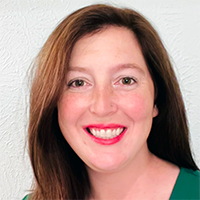
Tamra Badgett
Tamra Badgett, final judge of our Tom Howard/John H. Reid Fiction & Essay Contest, is a writer of prose poetry, nonfiction, and memoir. She holds an MA and MFA from the School of Letters in Sewanee, Tennessee, where her work explored language, memory, and the quiet complexities of Southern life. A former French teacher, she spent ten years guiding Texas students through language, literature, and translation. Tamra brings an interdisciplinary approach to her craft, writing with rhythm, lyricism, and a deep attention to the layered textures of place.
Contest Judges
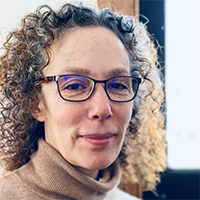
Sarah Halper
Sarah Halper is an assistant judge of our North Street Book Prize and our Tom Howard/John H. Reid Fiction & Essay Contest. She earned her undergraduate degree in English History and Literature at Harvard and her graduate degree at The MFA Program for Writers at Warren Wilson College.