 Ink?
Ink?
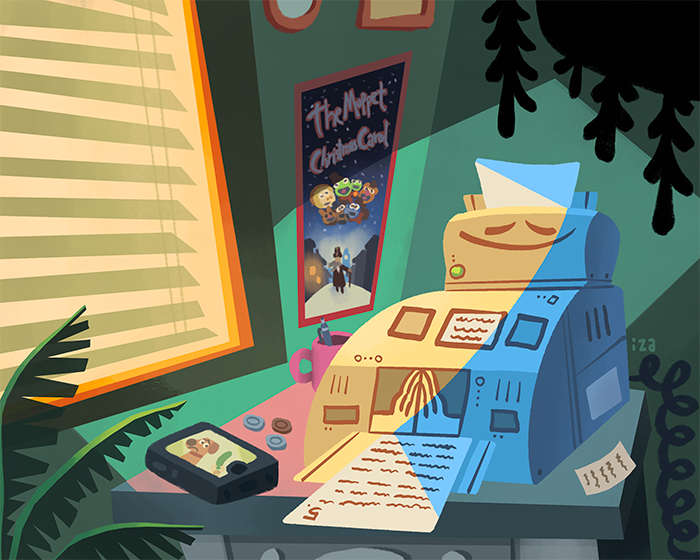
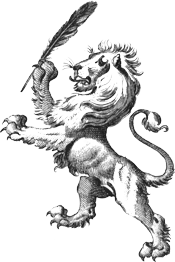
Illustration by Melody Iza
I have a printer?
It's become something of an ontological question.
It sits on the desk
the way a priest sits in a confessional—
certain of its own necessity,
comfortable with silence,
not especially useful
on a Tuesday.
It cost me forty-nine pounds.
I own it. I have the receipt.
I have touched it with my actual hands.
The warranty card is somewhere in a drawer
with the instructions for a microwave
I no longer possess.
These are the artifacts of ownership.
I mention this
because the concept will not recur.
The ink is a different arrangement.
The ink is subscribed to.
The ink is a service.
The ink is four millilitres of pigmented petroleum
in a small plastic capsule
for which I pay three pounds monthly
to a corporation in California
that was once, in better days, a garage,
and has since become a philosophy.
I am on the Starter Plan.
Five pages per month.
Five.
I could not print the instructions
for my own execution
and stay within my allocation,
which would at least have simplified
the billing dispute.
I read the terms and conditions.
They said: if you cancel,
the cartridges you physically possess—
the small plastic rectangles
currently lodged in the body of the machine
you own outright, in fee simple,
without encumbrance or lien—
will be remotely lobotomized.
Somewhere in Palo Alto
a man in a quarter-zip fleece
has, at this moment,
the technical capacity
to reach through the internet
and turn off my cyan.
(I fucking love cyan.)
I once owned a VHS tape of The Muppet Christmas Carol.
I did not pay Michael Caine a monthly fee
to access the scene where he weeps
over the counting-house ledger.
I owned the weeping. Outright.
It asked nothing further of me.
Not even, at Christmas, a card.
Michael Caine (born Maurice Micklewhite, no less) once said
his father died owning nothing—
not the bed, nor the sheet,
nor the breath in his lungs
that the state had seen fit to tax.
He spent a lifetime buying houses and land
just to prove he was no longer that man.
His voice has since been harvested,
compressed, and licensed
to a startup in London with a lowercase name.
If I want to hear him tell that story,
I have to rent his soul by the character count.
Maurice Micklewhite senior would have recognised the model.
He would not have been surprised.
He would have made a cup of tea
and looked out at the garden
and not said anything about it,
which is, now I think of it,
exactly what I did.
I have a file.
A document I wrote myself,
containing words I arranged
with my own mind,
in software I no longer own
because nobody owns software anymore.
Software is a garage in California.
Software is a company called Adobe
which sounds like a dwelling
and operates as a landlord.
If I cancel Adobe,
I cannot open my own document.
My words sit in their container
like a note in a bottle
that the sea has invoiced.
I wrote to Adobe about this.
They replied with a link
to a page about their Creative Cloud Family,
which is what they call the arrangement—
The Family—
Immediately, I pitch myself a skit.
Midsommar, directed by Zuckerberg.
Thomas Jefferson wrote something about this.
He used different language
because printers were a different situation in 1776
and also he owned people, which complicates things a bit,
but I believe, had he lived to see the Starter Plan,
he would have written an additional document,
shorter,
with better swearing.
I am not angry.
I am watching, for the fourteenth time,
a video of a dog
who is frightened of a cucumber.
The dog has no subscription model.
The cucumber is outright. (Ten points to the cucumber.)
Nobody has sent the cucumber
a link to their Creative Cloud Family.
I own the dog's fear.
I own the cucumber's indifference.
I am completely fine.
Please enjoy this YouTube video of the author reading his poem.