


Resources
From Category:
Mayweed
By Frannie Lindsay. Winner of the 2009 Word Works Washington Prize, this spare and radiant poetry collection centers on acceptance of loss. Its key figures are a beloved sister who died of cancer, and their late father, a perpetrator of incest.
MC Nuts: William Wordsworth Rap
This YouTube video reinterprets the 19th-century poet's famous "Daffodils" as a hip-hop performance.
McSweeney’s Internet Tendency: Sestinas
Luscious witty sestinas on topics great and small. "Anna Karenina (Or Like, Most of It)" is not to be missed. Submissions are accepted, if they're sestinas (definition and examples).
Meanings and A Winter’s Night
MEANINGS by Norman William Kearney
So sweet the rose, that opens in the sun,
How soft the light, when day is almost done.
Gardenias scent wafts gently on the breeze,
And fresh the air across the lapping seas.
The gentle touch, when love is said, and felt,
Sounds, far away, from distant ringing bells.
Sweet kiss of lips, when given in surprise,
A song of birds, on blue and cloudless skies.
Wind blows light, thru' tresses, soft' and fair,
The music plays, and love songs fill the air.
Turn of head, when words are softly spoken,
A promise kept, and never to be broken.
These things there are, and here for all to see,
But only you, mean all of this, to me.
Copyright 2011 by Norman William Kearney
A WINTER'S NIGHT by Norman William Kearney
A winter's day 'tho it be sharp might be a man's delight,
When a hard days work is done, it quickly turn to night.
The sight and sound of rain on roof, or twinkling stars above,
Brings thoughts anew, and fresh, and keen perhaps ideas of love.
The warmth that comes from heart of man might serve to overcome,
A cold and cheerless time, from the weakening of the sun.
And were you there and waiting still, for man's return from toil,
Then I would never feel the cold that comes from winter's chill.
Your presence cheers and fills the heart so that my blood runs full,
And always would I hurry home, for comfort, in the evening's cool.
If only you forever stood and always by my side,
I should feel always tall and strong, from darkness never hide.
From winter there could be no care, and nothing that forbode,
If you were there and kept me warm, and free from life's great load.
Copyright 2011 by Norman William Kearney
Critique by Tracy Koretsky
To preserve special formatting in this critique, we have uploaded the first part of it to Scribd. Just scroll through this window:
Critique of Two Poems by Norman William Kearney
Where could poems like "Meanings" and "A Winter's Night" be submitted? The following contests may be of interest:
Dream Quest One Poetry & Writing Contest
Postmark Deadline: July 31
Twice-yearly contest for emerging writers offers prizes up to $500 for prose, $250 for poetry, plus web publication; previously published work accepted
Poetry Society of Texas Annual Contests
Postmark Deadline: August 15
The Poetry Society of Texas offers a members-only prize of $450 and 99 other prizes ranging from $25 to $400, with various restrictions on theme and genre (some are also members-only); no simultaneous submissions
Helen Schaible Shakespearean/Petrarchan Sonnet Contest
Postmark Deadline: September July 15
Free contest from the Poets' Club of Chicago and the Illinois State Poetry Society offers top prize of $50 for a sonnet
These poems and critique appeared in the July 2011 issue of Winning Writers Newsletter (subscribe free).
Meanjin
Meanjin also gives wide coverage to issues of global concern. It is an imprint of Melbourne University Publishing. The journal's name, pronounced Mee-an-jin, is derived from an Aboriginal word for the finger of land on which central Brisbane sits.
mediabistro.com
Daily corporate strivings and struggles in magazines, newspapers, TV, new media and book publishing.
Meeting Faith: The Forest Journals of a Black Buddhist Nun
In this profound, witty memoir of spiritual transformation, an intense, high-achieving, activist intellectual goes to Thailand to research the unequal status of women in Buddhist religious life, but unexpectedly finds inner peace during her stint as a member of an ascetic order of nuns. The elegantly designed book pairs her current reminiscences with excerpts from her journals, side by side on the page like a Talmudic commentary.
Meeting New People
By Daniel M. Lavery. A domestic comedy that takes a turn into spiritual examination of conscience, this witty novel is narrated by a middle-aged food-service worker in Brooklyn who is reeling from her ninth best-friend breakup. As it turns out, the rules for female socialization are not as explicit or reliable as The Joy of Cooking, but that doesn't stop her from trying to explain them to herself and the lucky reader who overhears her interior monologue.
MEHPoeting: The Writings of Matthew E. Henry
Matthew E. Henry is a Pushcart Prize nominated poet and the author of Teaching While Black (Main Street Rag, 2020). He is editor-in-chief of The Weight Journal, an online literary magazine publishing high-quality creative writing by high school students. From his website bio: "His writing shines a black-light on the bed of relationships, race, religion, and everything else you're not supposed to discuss in polite company."
Memorial
By Diana Anhalt
Massive steel slabs, like hostile vegetation,
rise twelve meters high. This monument
of rusting pages thrusts upwards, outwards.
It walls in the trees of Chapultepec Park,
and casts shadows on mourners who come
bearing words for their desaparecidos.
Armed with fistfuls of chalk, a jack knife, a car key,
people punish the pillars with prayers, imprecations:
May they drown in their victims’ blood, Dios santo.
They finger the letters: Pinche gobierno, we don’t need
a monument. What about justice? And give voice
to the slabs: They left me nothing, not even a grave.
No one signs their names. Across the face of a pillar
vertically placed vague outlines of white chalk fade
to ghostly images, come back to haunt us:
Our country has lost its way and God has lost his ears.
Memories of You
By Gregory Ashe
Sitting on the sand,
gazing at the full moon.
The sea lit with the dull reflection of moonlight.
A cool breeze.
The air heavy with ocean salt.
The soft roar of waves crashing on the shore.
I remember that night
long ago
when you and I first kissed on the beach.
We sat in an empty lifeguard stand.
The night still warm from the day's summer heat.
I ran my fingers through your golden-brown hair glowing
in the moonlight.
A magical night.
I remember another night,
much longer ago,
when a different you and I first kissed on the beach.
We walked along the boardwalk.
The winter air cold and clear,
and the moon cast a million diamonds
sparkling on the sea.
I ran my fingers through your jet-black hair shimmering
in the moonlight.
A magical night.
Now I stare at the sea and moonlight
alone,
but still I smile.
For I am not really alone,
because you,
and you
are here with me in my thoughts.
A magical night.
Merlyn’s Pen
The Merlyn's Pen Foundation mentors promising young writers and trains English teachers. Submissions from students in grades 5-12 are accepted for their magazine. The 10+ years of archives include over 1,000 stories, essays and poems. Books, tapes and teacher's guides are available in the store.
Merriam-Webster Ask the Editor Videos
These lively short videos from dictionary publisher Merriam-Webster discuss the origins of words and resolve common questions of grammar and usage. Is "irregardless" a real word? What is the correct plural of "octopus"? How do you use singular "they" grammatically? Now you will know.
Metallic Thud
By Cheryl J. Fish
for the Davids
World Trade Center and Mount St. Helens
"Step by step, breath by breath—no rush, no pain." –Gary Snyder
1.
David Burns, insurance man hears a metallic thud
just after morning coffee, September 11, 2001.
A crushing noise a windy void.
He peers out his north-facing view
sees windows blown out eye-level
windows, no crater.
Shouts to anyone who will listen
shouts to the wind.
Some co-workers flee
to floor 78 express car
Liberty Street in a matter of seconds
before number two's crash.
2.
Column of steam, ash, rises 7,000 feet.
Ice and rock, wind a wild ride.
Cracks merge and become the "bulge."
Volcano souvenir business flourishes.
USGS scientist David Johnston measures the bulge on the north flank.
His observation point Coldwater II six miles northeast of St. Helens peak.
Sightseers press towards the steaming crater for closer view and photos.
3.
Bystanders and students watch as captives plummet from the towers,
missiles of grief. This is not television. Yes, it is.
"Go home," I shout. "Look away." Snails and stomachs and tails.
You know nothing of what's to come. Metallic thud.
Dave Burns and his pal Paul rush onto the waiting Staten Island Ferry
Engine ramps ramps ramps into the blue and black.
Life jackets all around in case of an aerial attack
It's not the engine, no, but a hulking dust cloud,
Time-made matter, a dirge.
4.
A 13,000 foot eruption of ash and steam
harmonic tremor signaling. Hot
seismic chart blot May 12 a 5.0 earthquake
underneath the north flank of St. Helens
triggers a small debris avalanche half a mile down.
Many people come out with cameras and binoculars.
Last chance for Spirit Lake landowners to evacuate.
5.
David Johnston perishes; David Burns survives.
Bones cut the wind.
More towers rise.
Metanoia
By David Holper
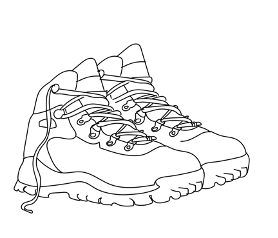
The plane ticket,
the train ride, the shuttle
the taxi, even the first step,
onto the gravel, into the dirt,
the dust, your boots whispering
against the dry grass,
these are just dust motes dancing
over the surface: the real journey calls you
deeper into the soul's secret country
where all such journeys
must lead you beyond expectations,
beyond these hazy dreamings,
if you are to finally set right
what you have long known was broken from the beginning.
*Metanoia (Greek, noun): The journey of transforming
your mind, heart, self, or way of life.
Metonymy Press
Based in Montreal, Metonymy Press specializes in queer, feminist, and social justice literature. They seek to promote literary fiction and nonfiction authors with underrepresented perspectives. Their motto: "We want to keep gay book lovers satisfied." See their contact page for submission guidelines.
Metphrastics
Metphrastics is an online journal of ekphrastic poetry that responds to artworks in NYC's Metropolitan Museum of Art. Editors say, "Traditionally, ekphrastic poetry describes a work of art. It may also respond imaginatively to the work, situate the poet within it, or engage in some other way that expands the meaning of the original piece." The attractively designed website can be searched by issue date, poet's name, or the artwork that inspired it.
MetPublications: Free Art Books Online
MetPublications, the book and catalog shop of New York's famed Metropolitan Museum of Art, has made over 600 books available to read online or download, with full text and illustrations.
MiblArt Book Cover Design
MiblArt offers affordable custom cover designs for self-published books in print and digital formats (e-book or audiobook). They will work in all genres, but their portfolio thus far is mainly commercial nonfiction and genre fiction, especially fantasy and thriller.
Michigan Review of Prisoner Creative Writing
The Prison Creative Arts Project at the University of Michigan publishes this annual journal to showcase the talent and diversity of Michigan's incarcerated writers.
Microcosm Publishing
Microcosm Press specializes in nonfiction DIY (Do-It-Yourself) goods that focus on the reader and teach self-empowerment. They publish books from people with both expertise and lived experience, on topics such as magic and herbalism, punk music and culture, queer erotica, travel, self-care, comics journalism, and "the bicycle revolution". Illustrated work is strongly encouraged. Browse sample titles on their website and send them a pitch that follows their detailed guidelines. Editors say, "We do not publish books that would primarily be described as poetry, fiction, travel stories, or memoirs, unless the work is more substantially about a nonfiction topic than the author's life and experiences. If your book contains more than 20% personal stories, we are not the right publisher for you."
Microcosm Publishing
Based in Portland, OR, Microcosm publishes fiction and nonfiction in specific categories that include magic and metaphysical, wellness, gardening, queer erotica, DIY/self-help, neurodivergent resources, zines, and graphic nonfiction. Their books often have an illustrated element. We like this press for its leftist commitments and cool artwork.
Midst
Midst is an online journal that showcases the creative process by publishing poems as an interactive time-lapse from first draft to the author's preferred final version. Editors hope to make poetry more accessible by demystifying the process of its creation.
Midwest Book Review
Established in 1976, the Midwest Book Review is an organization committed to promoting literacy, library usage, and small press publishing. Reviews are posted monthly on their affiliated websites and distributed to libraries, literary websites, databases, and online discussion groups. MBR welcomes small press and self-published authors.
Midwest Book Review’s List of Review Sites
Midwest Book Review is a monthly online publication that reviews self-published, small press, and mainstream books in a variety of genres. Their site includes additional resources for author marketing, such as this vetted list of other review organizations and publications that are open to indie books.
Midwest Writing Center
Founded in 1979, the Midwest Writing Center offers literary awards, conferences, workshops, book groups, and readings. Their publishing arm, MWC Press, publishes the winners of their poetry chapbook conference, the young writers' literary journal The Atlas, and literary novels and memoirs.
Miles from Standing Rock, tonight,
By Leah Angstman
over this snowdrift land fires light into the expanse—
a joke, it seems, the ice melting into puddles of fresh water
beneath throngs sending signals upward: rain down.
Our bodies are water, in and on,
at heartbeats of what we must think and drink—
You know when you've gone dry,
to go without breath and skin,
roots to your earth.
What is water to us, and how do we own it?
Broken at the base of Ash Coulee,
spill under vitality herded through fist,
uncontained. Make the point drawn from wells of irony:
we'll claim what soaks in our soles,
but it could be anything, oil-thick or water-wet,
what rains up.
Military Experience and the Arts
This organization's mission is to bridge the gap between military and civilian cultures through creative expression and scholarship. The site includes resources to help veterans write their personal stories. MEA publishes three magazines: The Blue Falcon, a journal of military fiction; Blue Streak, a journal of military poetry; and the Journal of Military Experience, an interdisciplinary scholarly periodical. See website for their calls for submissions.
Military Writers Society of America
Association of writers and artists who honor the military through their creative works. Most of the 500+ members are active-duty or veterans, but civilians may also join. The MWSA offers annual awards for published books in a variety of genres including nonfiction (scholarly and popular), children's literature, poetry, fiction, memoirs, spiritual/religious, and science fiction. The site also features many book reviews.
Milk Candy Review
Milk Candy Review is an online journal of "beautifully weird, lyrical" flash fiction up to 750 words. They publish new work weekly, and include a two-question author interview with each selected piece. Send one unpublished story by email as a Word document or pasted into the message. Contributors have included Sara Siddiqui Chansarkar, Thomas Kearnes, Kathryn Kulpa, and Margaret Roach.
Milkweed Editions: Multiverse Literary Series
An imprint of Milkweed Editions, a well-regarded literary press, the Multiverse series publishes neurodivergent poets. Its creator, Chris Martin, says that Multiverse is "devoted to different ways of languaging" and seeks innovative literary styles that "emerge from the practices and creativity of neurodivergent, autistic, neuroqueer, mad, nonspeaking, and disabled cultures." Poets in their catalog include Hannah Emerson and Adam Wolfond. Read Brian Gresko's article about Multiverse in the July/August 2022 Poets & Writers.
Miller, Reiter & Robbins: Three New Poets
Miller, Reiter & Robbins were all discovered by Hanging Loose magazine. "Distinctive voices even in their earliest efforts." Order from Amazon or directly from Jendi Reiter for $9.
Misfit Magazine
Edited by poet Alan Catlin, Misfit Magazine is an online poetry journal that publishes gritty and energetic free verse. They value authentic narrative poetry inspired by "down in the dirt, real life experience". Submission periods are Jan. 2-Feb. 28 for Spring Issue, April 1-May 31 for Summer Issue, Sept. 1-Oct. 30 for Fall/Winter Issue.
Missouri Review
We especially enjoy MR's fiction selections.
Mobile Poets.org
The Academy of American Poets has made their entire collection of over 2,500 poems on Poets.org, as well as hundreds of biographies and essays, available in a mobile format for your Palm Pilot or iPhone.
Model
There's more to this teen memoir than meets the eye. Beautiful, blonde Cheryl has a wise old head on her shoulders, which helps her survive encounters with all sorts of human predators as she tenaciously builds a career as a fashion model in New York City. She's also a sharp, funny writer.
Modern American Poetry
A large, collaborative collection of critical essays. Background and analysis of many of today's most interesting American poems and poets. Submissions welcome. Click here for information.
Modern Haiku
Publishes original poetry in Japanese forms, book reviews, and essays. Also sponsors the Robert Spiess Memorial Award ($100), annual deadline in March.
Modern Haiku
An independent journal of haiku and haiku studies. Publishes original poetry in Japanese forms, book reviews, and essays. Also sponsors the Robert Spiess Memorial Award ($100), annual deadline in March.
Modern Manuscript Format Guide
Speculative fiction writer William Shunn (An Alternate History of the 21st Century: Stories) demonstrates the elements of a professional-looking manuscript submission. Mouse over the highlighted text sections of his template for an explanation of each element and why it's needed.
Momma, Did You Hear the News?
By Sanya Whittaker Gragg, with illustrations by Kim Holt. This sensitive picture book features a Black family giving their two young sons "the Talk" about how to avoid being shot by the police. The book manages children's fears about current events in an age-appropriate way, and also conveys a nuanced message that many police officers are good people doing a dangerous job.
Monsters and Other Lovers
Raw, sensual, touched with bittersweet humor, Glatt's poems take an unflinching look at women's bodies experiencing love and death.
Months to Years
Founded in 2017, Months to Years is an attractively designed online journal of poetry, essays, and artwork about terminal illness and mortality. See website for submission periods and suggested topics.
Montreal Pantoum I
By Isobel Cunningham
My island city bathed in the river's wet embrace
Her bridges, strands of a silver web, span shore to shore
A dormered house, a balcony, a curved staircase
Come, stroll along marshy banks where rapids roar.
Her bridges, strands of a silver web, span shore to shore
Sweltering summer then brilliant leaves of autumn fall to bless
Come, stroll along marshy banks where rapids roar
Hear the hum of commerce, traffic and excess.
Sweltering summer then brilliant leaves of autumn fall to bless
The empty churches, spires that decorate the town
Hear the hum of commerce, traffic and excess
Short triumph of the blizzard and the plow's soft growl
The empty churches, spires that decorate the town
Sidewalk cafes sacred to l'apero, le flirt
Short triumph of the blizzard and the plow's soft growl
Sweet spring of lilac, gangsters and le cirque
Sidewalk cafes sacred to l'apero, le flirt
A dormered house, a balcony, a curved staircase
Sweet spring of lilac, gangsters and le cirque
My island city bathed in the river's wet embrace.
Morbid Anatomy Library
Located in Brooklyn, this research library and private collection surveys the interstices of art and medicine, death and culture. It makes available a collection of books, photographs, ephemera, and artifacts relating to medical museums, anatomical art, collectors and collecting, cabinets of curiosity, the history of medicine, death and mortality, memorial practice, art and natural history, arcane media, and more. The accompanying website includes links to other resources on these topics. (Photographs on the site may disturb the squeamish.)
More Odds Than Ends
More Odds Than Ends is an online community for writers of poetry, fiction, and creative nonfiction. Weekly blog posts offer a selection of quirky photos and one-sentence prompts, some provided by the site editors and others submitted by members.
Morning in the Burned House
By Margaret Atwood. This mature poetry collection considers history and warfare from women's perspectives. A father's death prompts a more personal turn to poems exploring memory and loss. The style is straightforward, declarative, assured. Yet the multi-layered meanings of these poems complicate our conventional wisdom and lead us into mysteries that can only be experienced, not mastered, through language.
Mosaic of the Dark
By Lisa Dordal. A Christian girl wondering where her emerging lesbian-feminist consciousness fits into her faith. A woman grappling with the legacy of her alcoholic, possibly closeted mother. In her debut collection from Black Lawrence Press, Dordal makes these "confessional" themes fresh and strange again by centering her poems on a tangential detail which, after careful rereading, telescopes out into a larger narrative. The technique is reminiscent of those close-up photo puzzles in science magazines, where you must guess the whole animal from an abstract shimmer of scales or feathers.
MosaicMusings
Online forums to post your poetry and prose, as well as several contests per year for the best work on the site.
MotionPoems
MotionPoems features short, evocative, professionally produced videos that dramatize the poems being read on the soundtrack. Featured authors include Robert Bly, Todd Boss, Jane Hirshfield, and Freya Manfred. At present, they are not accepting unsolicited submissions.